
Covington Scheduled and Actual Release
A projected date is a planning estimate based on the sentence data and rules known to the agency. Mississippi's public state-prison field is labeled Tentative Release Date. An actual release date records the event after confinement ends. These dates can match, but they answer different questions. The tentative value does not prove that the person left a prison, entered parole, moved to Earned Release Supervision, or reached final discharge.
A pretrial Covington County detainee usually has no sentence-based release date. Release can depend on bond, dismissal, a plea, a court order, or the resolution of another hold. Even when a judge authorizes release, jail processing and any detainer may affect the time of departure. For a sentenced person, MDOC can compute several dates, including parole eligibility, ERS, tentative release or discharge, and maximum release. They are not interchangeable.
A transfer also requires careful wording. If Covington County Jail sends a person to MDOC, county custody ended but state custody continued. That is not release to the community. Likewise, parole or ERS ends prison confinement while state authority remains. Only a record of final discharge answers whether the sentence and supervision have fully ended.
Find Covington Inmate Release Dates
Classify the custody before searching. The MDOC Inmate Search is relevant to a state prisoner, not every person booked in Collins. The sheriff-held jail docket and the court judgment are the local sources for a county sentence or pretrial case. An MDOC ID is the best state identifier. For the county path, a full name, date of birth, booking range, and court cause number can help separate similar names.
- For state custody, open the MDOC Inmate Search and search by MDOC ID, or use first and last name.
- Open the likely detail and compare date of birth, county of conviction, entry date, sentence, location, and unit. Do not rely on name alone.
- Read the field labeled Tentative Release Date exactly as displayed. Preserve a blank field instead of estimating a value.
- If parole is plausible, check the separate MDOC Parolees Search. A match shows supervision after confinement, not final discharge.
- For a Covington County jail term, call the Sheriff/Jail at 601-765-8281 for the sentence or release computation and obtain the court judgment that controls the term.
- When the public tools are incomplete, request the MDOC time sheet, computation sheet, actual release mechanism, and maximum discharge date through the records process.
The official MDOC inmate search provides the state-record entry point shown below.
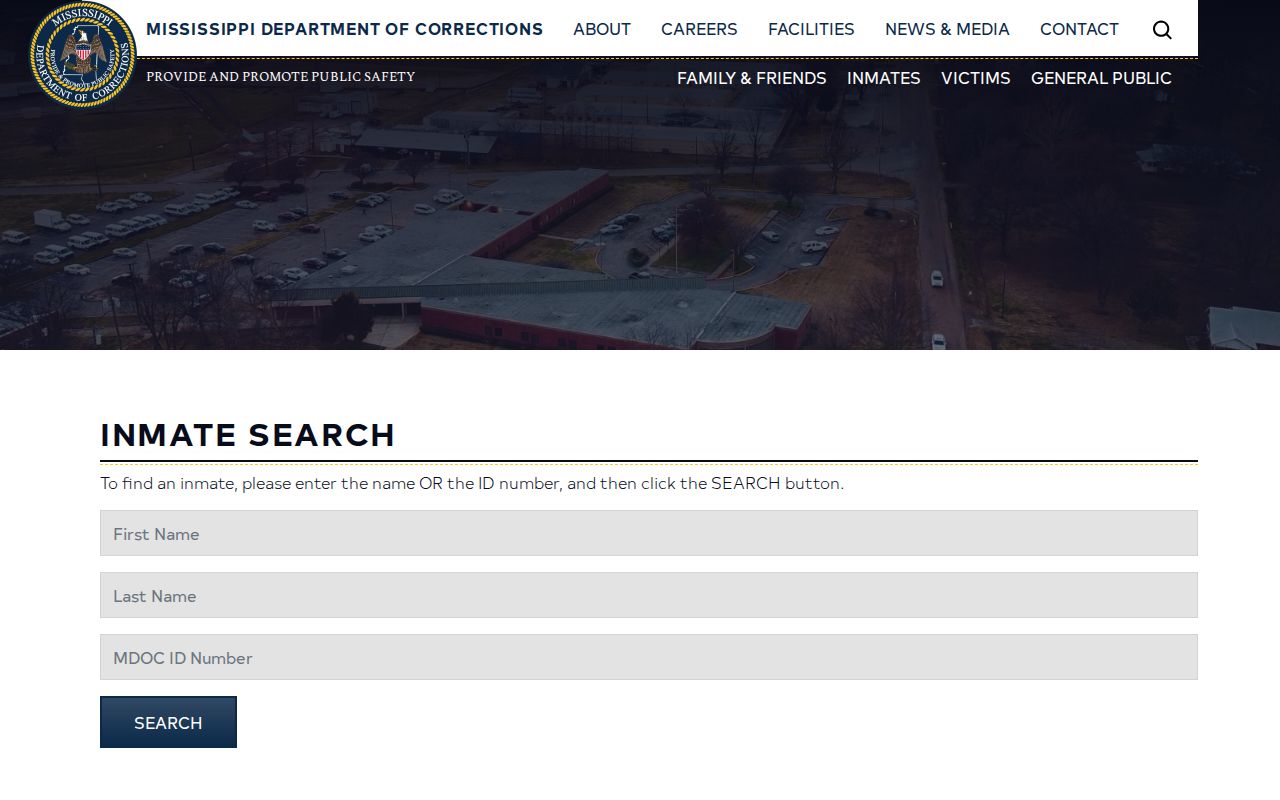
This form searches the state corrections population. It is not a current or historical list of all Covington County Jail bookings.
Note: County of conviction helps confirm identity, but it does not prove that a person served that sentence at Covington County Jail.
Covington Tentative Release Date Fields
An MDOC detail record provides more context than one date. The demonstrated official record includes the person's name, MDOC ID, physical descriptors, entry date, location, unit, location-change date, number of sentences, total length, offense, sentence length, county of conviction, sentence date, and Tentative Release Date. Each field helps test whether the record belongs to the person and whether the date fits the correct sentence.
| Field | How it helps interpret release timing |
|---|---|
| MDOC ID | Provides the most stable key for the state corrections record |
| Entry date | Shows when the person entered the MDOC record, not necessarily the first day credited |
| Location and unit | Indicate continuing state placement when a current facility is listed |
| Sentence date and length | Identify the term tied to MDOC's computation |
| County of conviction | Helps connect a sentence to Covington County without proving a jail stay |
| Tentative Release Date | Shows MDOC's public estimate when populated, not the actual custody event |
The official example detail displays a populated Tentative Release Date with the sentence and location fields around it.
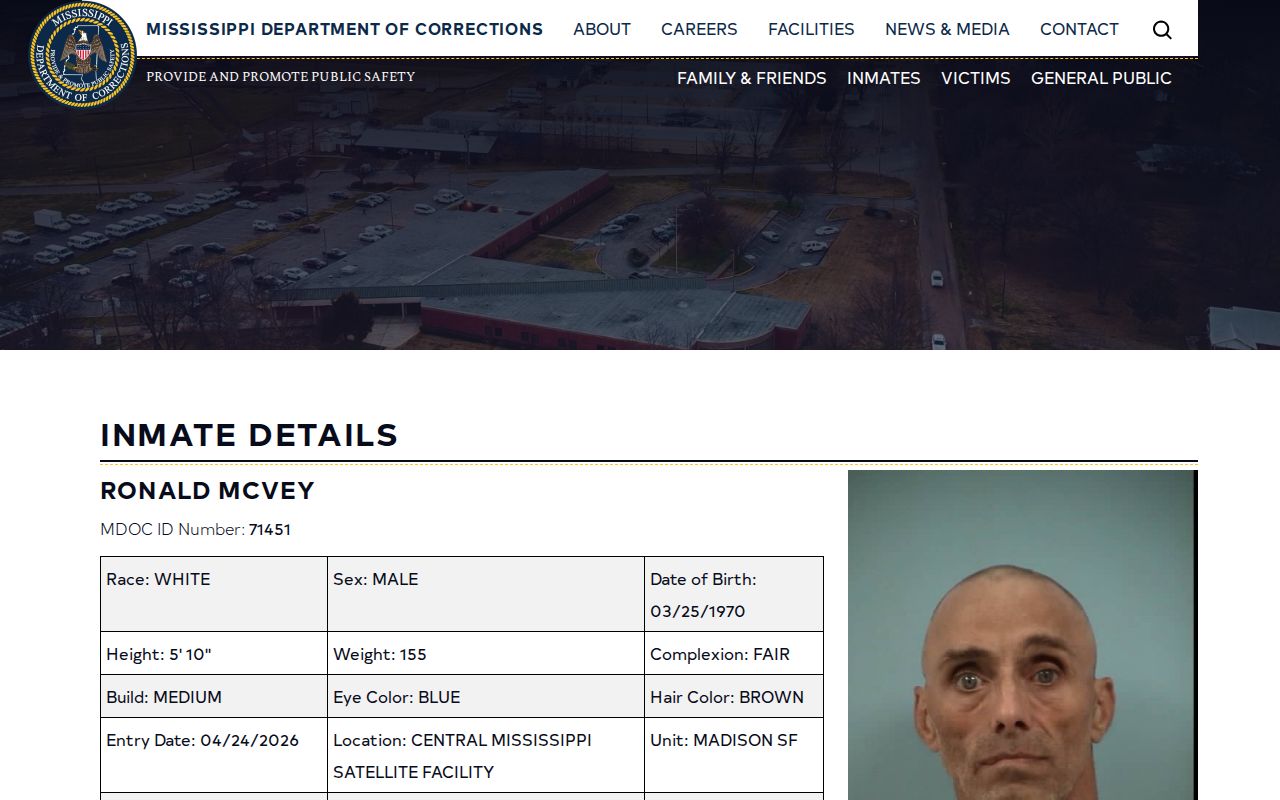
The surrounding fields are essential. A date copied without identity, sentence, and location context can be assigned to the wrong person or misunderstood as a completed release.
Blank Covington Tentative Release Dates
MDOC's public label may appear without a value. The official life-term example shown below proves that a blank field is a real system outcome, not a prompt to calculate a date. A blank can reflect the sentence structure or the limits of what MDOC displays publicly. It must not be converted into an assumed parole date, ERS date, or maximum date.
The official blank-date example shows how MDOC preserves the Tentative Release Date label with no date entered.
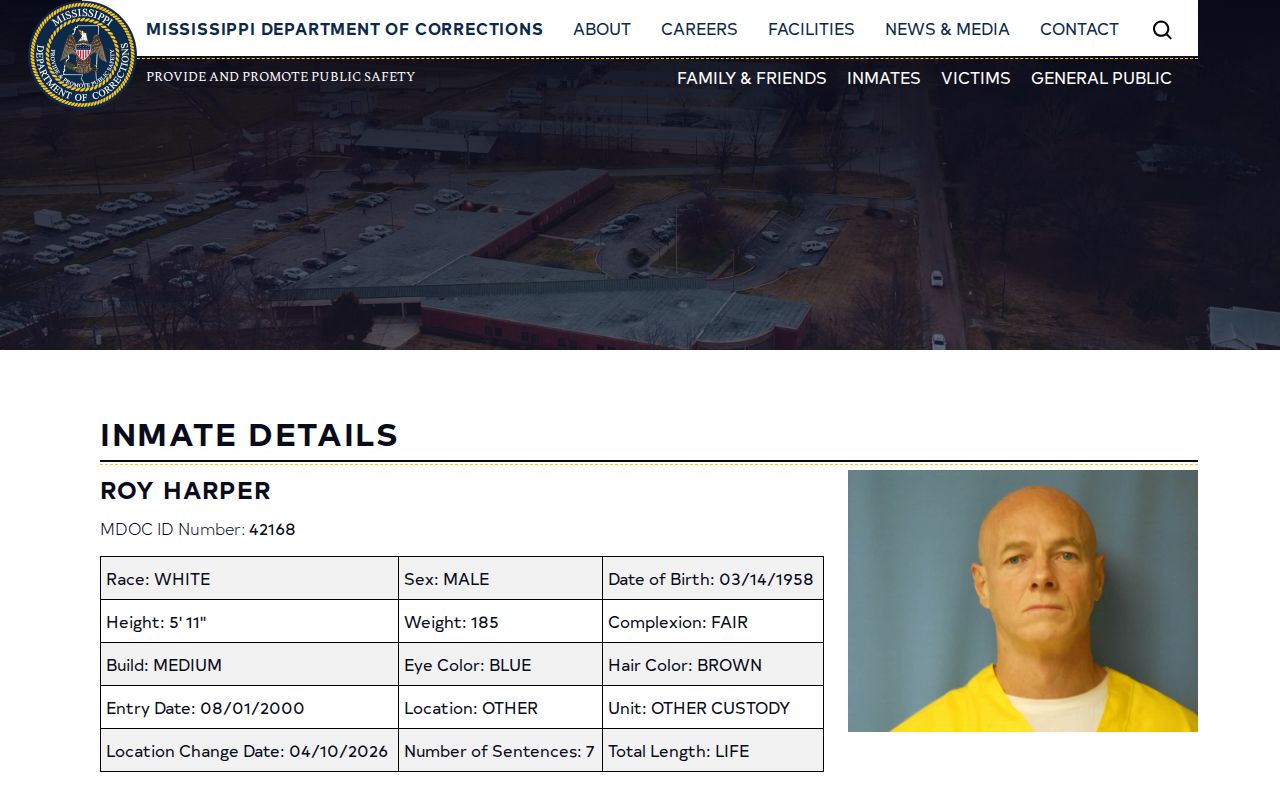
This distinctive blank-date behavior is why arithmetic cannot replace the agency record. Ask MDOC for a public computation or time sheet when a lawful date exists but the public detail does not display it.
The MDOC handbook treats parole, ERS, tentative release or discharge, and maximum release as separate calculations. Report the named field and its value, including a blank, without substituting a different milestone. A changed date should likewise be recorded as changed rather than treated as an error until MDOC explains it.
Note: A blank tentative field does not prove permanent confinement, parole ineligibility, discharge, or release to another custodian.
Covington Earned-Time Release Rules
Mississippi Code Section 47-5-138 provides an earned-time framework for eligible sentences imposed after June 30, 1995. When MDOC finds that conduct and performance requirements are met, an eligible inmate may receive four and one-half days of earned time for each 30 days served. The usual allowance is capped at 15 percent of the sentence. This is the source of the common shorthand that an eligible person may serve about 85 percent in confinement under that mechanism.
The 85 percent phrase is not a universal release calculator. Statutory exclusions, sentence date, offense, age-related provisions, consecutive terms, jail credit, other programs, detainers, conduct, and forfeited credit may alter an individual result. A serious rule violation can lead to loss of earned time. MDOC, not a public arithmetic shortcut, applies the controlling record and current law.
Early release through this provision leads to Earned Release Supervision until sentence expiration. The person remains under MDOC jurisdiction and retains inmate status. Thus, “released on ERS” means release from prison confinement, not final discharge. The current statute should control fine points because an MDOC-hosted one-page summary appears to reproduce older language in part.
Covington Parole Release Date Rules
Parole eligibility uses a different legal framework from earned time. Official Parole Board rules applying Section 47-7-3 describe offense-dependent thresholds for some post-June 30, 1995 sentences. Nonviolent offenses generally use 25 percent or 10 years, whichever is less. Violent offenses under Section 97-3-2 generally use 50 percent or 20 years. Named armed robbery, drive-by shooting, and carjacking categories use 60 percent or 25 years. Certain nonviolent, nonhabitual drug offenses use 25 percent or 10 years.
Those figures mark possible first consideration, not a release promise. Habitual-offender provisions, sex-offense rules, certain capital or murder categories, human trafficking, trafficking drug offenses, and a sentence that bars parole can change or exclude eligibility. Exact offense language, sentence date, modifiers, and the applicable version of law matter. The Mississippi State Parole Board also retains discretion to grant or deny parole.
MDOC calculates the eligibility date, while the Board decides the parole action. No public calendar of individual hearings or general decisions database was verified. A predicted hearing month cannot stand in for the Board action or the release event. For a person believed to be on parole, pair the Parolees Search result with the official Board record.
Note: Eligibility means the case may be considered; it does not mean the person will leave confinement on that date.
Covington County Jail Sentence Dates
A local jail sentence should not be calculated by copying the MDOC earned-time rule. No official Covington County jail good-time policy or weekend-release adjustment was found. Ask the sheriff for the sentence and release computation, and obtain the judgment from the court that imposed the term. The official county page for Sheriff Darrell M. Perkins identifies the sheriff as county jailor and keeper of the jail docket, which can document the admission and terminal event.
County jail time can also affect a later state sentence. The MDOC handbook says eligible presentence jail time connected to the cause number may be credited when it is not duplicated. MDOC gets jail information from the county of conviction. A person who moved among county facilities may need the complete custody record to support the calculation. A booking date alone does not prove that every day applies to every sentence.
For a pending Covington case, use Justice Court records for early proceedings and Circuit Court documents for felony judgments and durable dispositions. A bond order may authorize release, yet another charge, warrant, or detainer can delay departure. The jail docket supplies the physical timestamp after all processing is complete.
Why Covington Release Dates Change
A date may change because the underlying sentence record changes or because a later event affects custody. Not every factor moves the date in the same way. Some alter MDOC's computation, while others prevent release to the community even if the sending custodian is ready to close its part of the case.
| Factor | Possible effect | Where to verify |
|---|---|---|
| Earned-time award or forfeiture | May advance or delay the tentative date for an eligible state sentence | MDOC computation or time sheet |
| Presentence jail credit | Can change the credited start or remaining term when legally applicable | MDOC calculation, jail record, and judgment |
| Consecutive or corrected sentence | Can extend or revise the total term | Filed court order and MDOC sentence data |
| Detainer or another hold | May turn one agency's release into transfer to another custodian | Sending agency release entry and receiving agency record |
| Parole grant or denial | May create supervised release or require later consideration | Parole Board action and MDOC status |
| Data correction | May replace a public date after identity or sentence information is fixed | Agency record owner |
Do not select the date that looks most favorable when sources conflict. Record when each source was checked and ask the agency that owns the computation or terminal event to explain the difference. A court order can precede jail processing, and a receiving agency may post a transfer after the person vanishes from the sending record.
Confirm Covington Actual Release Dates
Use the tentative value to plan a later check, not to announce release. Before the expected date, register for a custody alert if the supplying agency participates. The Covington VINELink Release Check explains the separate notification registration and PIN step. An alert is still a prompt to verify because agency data can lag and a custody change may be a transfer.
On or after the expected date, obtain the actual event from the right custodian. For Covington County Jail, request the jail-docket release or transfer entry. For MDOC, check the inmate and parolee tools, then request the release or discharge record, time sheet, and public supervision status if needed. A federal sentence belongs in the BOP locator, while ICE and U.S. Marshals paths require their own records and docket checks.
The MDOC GovQA portal accepts focused requests when the public result does not establish actual release. Ask for the existing record by name, MDOC ID, and a clear date range. MDOC's published policy describes a written response within seven working days and production within 14 working days after request and payment unless more time is required.
A final answer should state the scope: released from Covington County Jail, transferred into MDOC, released from prison to parole or ERS, or fully discharged. Those are different events. The actual record, not the tentative field, determines which one occurred.